I find tiny businesses fascinating.
Not startups that happen to be tiny because they launched last Tuesday and plan to employ 500 people by Christmas. I mean businesses that are deliberately small.
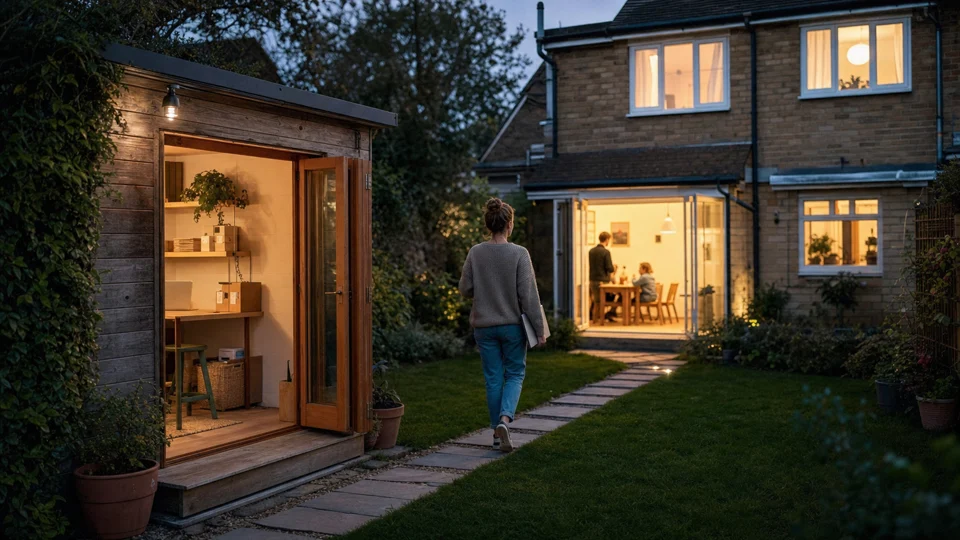
One person with a product, a group of customers and enough income to support themselves and their family.
That's the whole company.
Nobody is preparing a slide about total addressable market. It's just somebody making something useful and selling it to enough people for the numbers to work.
The fact that this is possible still feels a bit like magic.
Enough can be enormous
Most stories about business are stories about growth.
Revenue goes up. The team gets bigger. The company moves into a nicer office, raises money and opens another office somewhere with better weather.
Success means more.
Tiny businesses work from a different definition. They don't need millions of customers or a plan to dominate a market. They need enough customers to provide a good living for one person or one family.
Enough is a much smaller target, but reaching it can completely change somebody's life.
A business making a modest amount would be irrelevant to a large company. To one person, it can pay the mortgage, put food on the table and remove the need to ask a manager whether they can take Friday afternoon off.
That isn't a small outcome.
Built around a life
The freedom is what interests me most.
A one-person business can be shaped around the life of the person running it. They can start early, finish late, take Wednesday off or spend August working less because the children are home.
They don't need approval from a board or have to create a policy that works for 200 employees. They can make a decision on Monday morning and live differently by Monday afternoon.
That doesn't mean they never work. In reality, the person with the freedom to work whenever they like often chooses almost all of the time.
Customers still need help. Bills still need paying. Something will inevitably stop working at the exact moment you've left the laptop at home.
But there's a difference between having no demands on your time and choosing which demands you're willing to accept. A tiny business may not remove responsibility, but it gives the owner much more control over it.
Small is a feature
We often talk about staying small as though it means a business failed to grow.
But small businesses have advantages precisely because they're small. There are fewer costs, fewer meetings and fewer people who need to agree before anything can happen.
The owner can know the product, the customers and the bank balance without needing three dashboards and a weekly leadership meeting.
They can serve a narrow audience that a bigger company wouldn't consider worth the effort. A thousand happy customers can be an excellent business when you don't have a thousand salaries to pay.
Staying small also means the business doesn't have to become a job managing the business.
Plenty of people start companies because they enjoy making things, only to become full-time managers of people who now make the things instead. Growth can move you further away from the work you wanted to do in the first place.
A tiny business lets the person who cares most stay close to the useful part.
The maths keep changing
The internet changed what a tiny business could be. A narrow audience no longer meant a small number of people within driving distance.
That audience can now be scattered around the world. There may not be enough local people who need a particular piece of software, course, template or strange replacement part, but there can easily be enough of them globally.
You don't need everyone.
You need a small group with the same problem and a way for them to find you.
Digital products changed the maths again. One person can build something once and sell it repeatedly without making another copy by hand each time.
Now AI is changing how much that one person can do.
It can help them write software, produce designs, understand customer feedback, draft marketing copy and answer support questions. These jobs still need judgement, but they no longer all need a different person before the business can get started.
AI doesn't make the business passive. Somebody still has to decide what to build, earn the trust of customers and deal with the support email that arrives just as they've closed the laptop.
But it gives one person far more capacity than they had before. The internet made the audience possible, digital products made serving it economical and AI is making more of the work possible for one person.
Growing in either direction
Most businesses are expected to grow every year.
A tiny business can grow when its owner wants it to, but it can also shrink. They can release more products, spend money on marketing and work longer hours for a while. Or they can stop pushing, accept less income and take some time back.
The business can change shape as their life changes.
That flexibility is difficult once a company has employees, investors and large fixed costs. A bigger business needs feeding. Standing still can quickly start to feel like going backwards.
A tiny business has fewer promises to keep. It can have an ambitious year without making permanent commitments based on that year lasting forever.
I like that the owner gets to decide what the business is for.
A different kind of ambition
None of this is an argument against building a large company. Big businesses solve problems that one person couldn't touch, employ lots of people and can create an extraordinary amount of value.
But they aren't the only serious form of ambition.
Building something useful enough that people choose to pay for it is difficult. Building it well enough that the income supports your family is a remarkable achievement, even if nobody writes about the funding round that never happened.
There's something appealing about a business with no desire to become an empire. It knows who it serves, earns enough to justify its existence and gives its owner the life they wanted from it.
No enormous team. No complicated strategy. No plan to take over the world.
Just one person, a useful product and enough customers to make it work.
That's tiny by the usual measures of business.
It can be enormous for the person who built it.